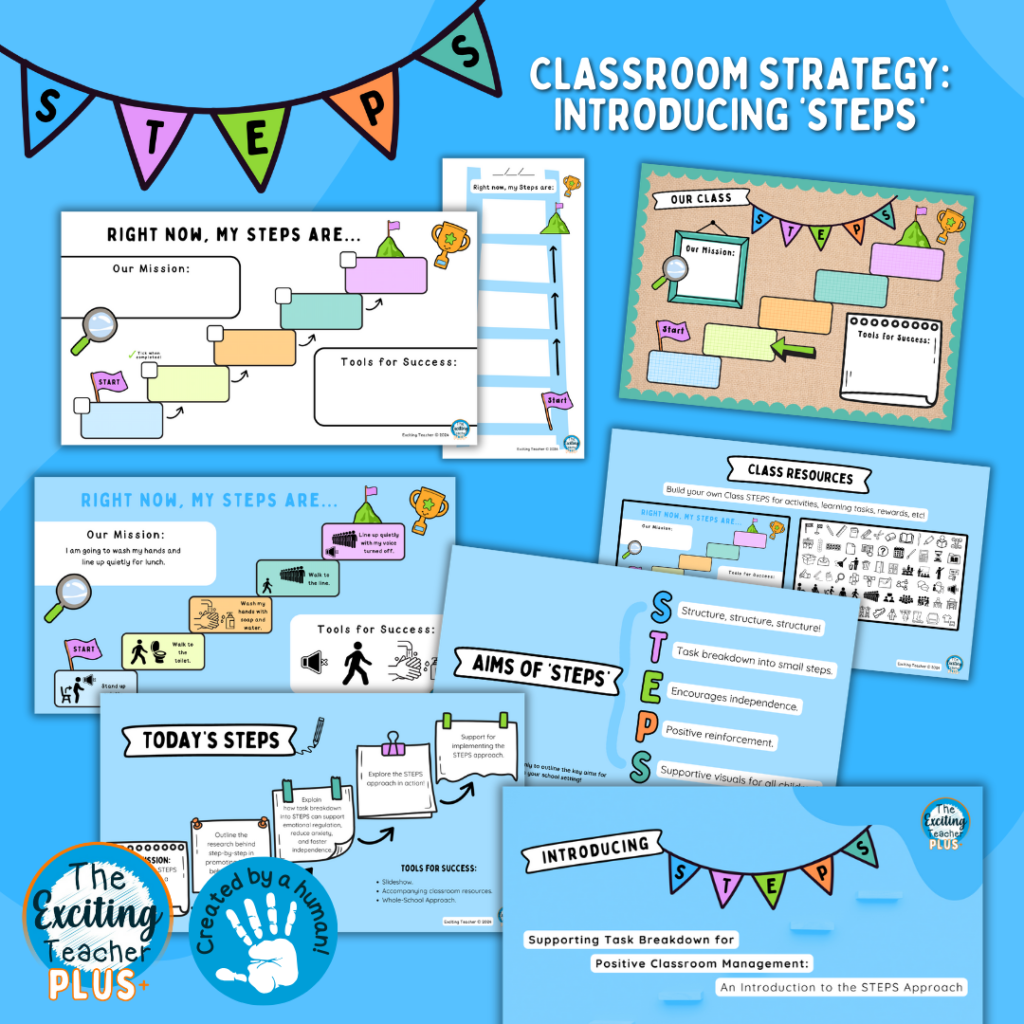
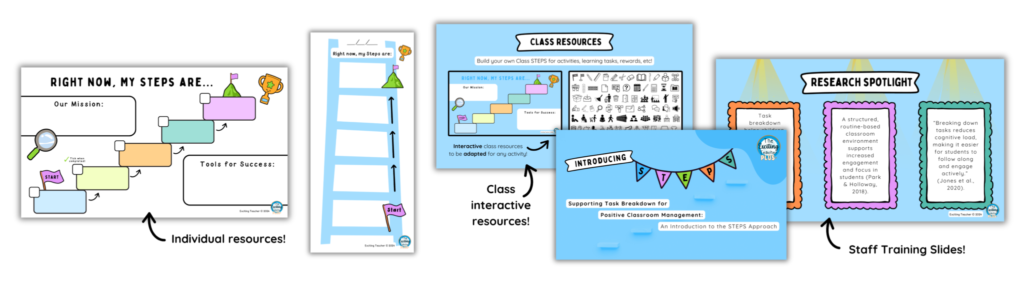
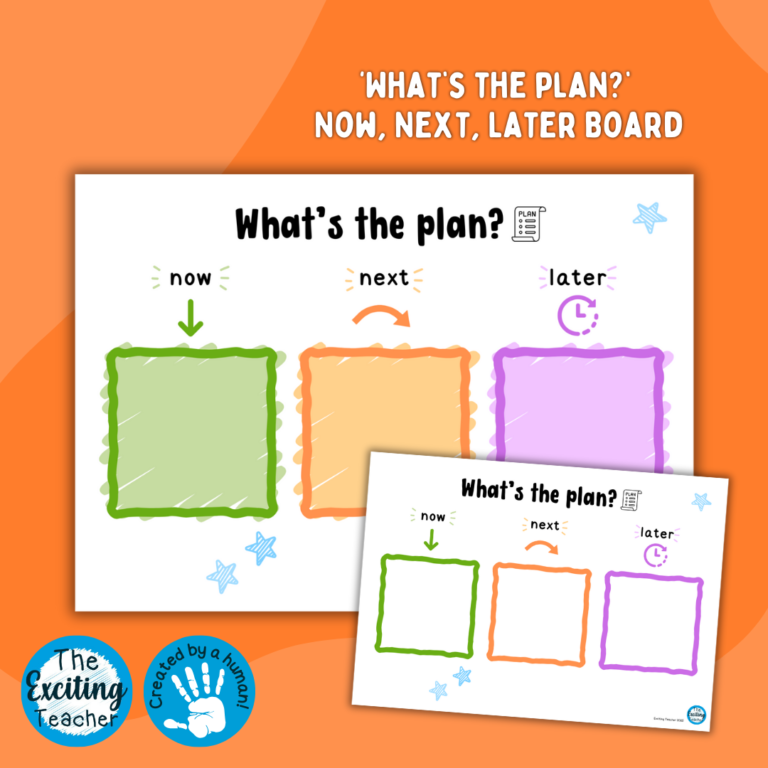
Introduction to the STEPS Approach: Supporting Task Breakdown for Positive Classroom Management
STEPS improves behaviour, independence, and emotional regulation. Builds a predictable classroom environment that supports all children, especially those with neurodiverse needs.
How does it help? Reduced anxiety, increased engagement, improved ability to follow instructions, and increased independence.
The STEPS Approach is a classroom strategy that is PERFECT for encouraging positive behaviour in the classroom, reducing uncertainty and anxiety, promoting emotional regulation and supporting independence.
This is suitable for EYFS (with support), KS1, and KS2. This is part of a wider collection of resources for our Exciting Teacher Plus+ Members.
H11. about different feelings that humans can experience.
H13. how feelings can affect people’s bodies and how they behave.
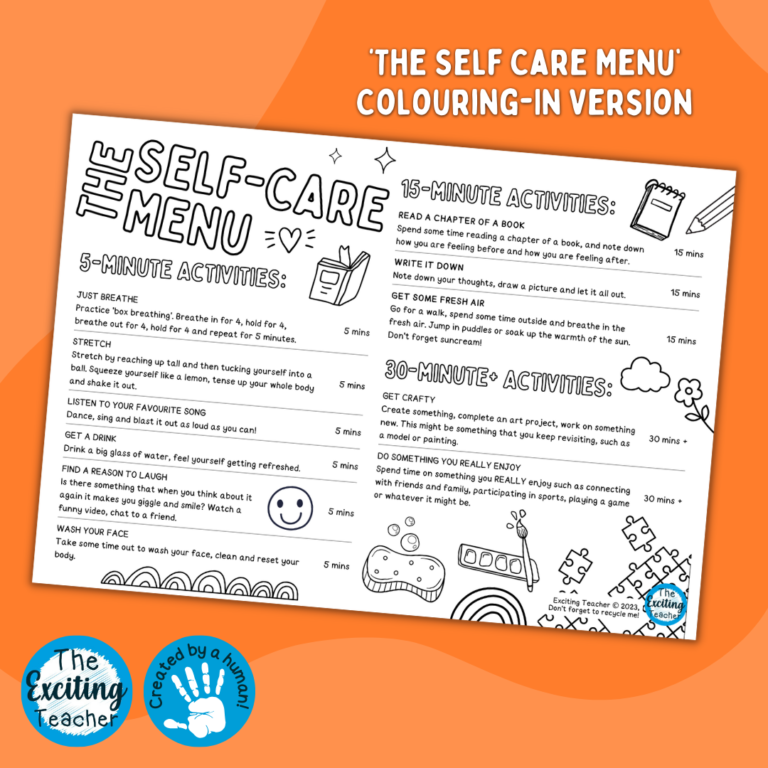
H17. about things that help people feel good (e.g. playing outside, doing things they enjoy, spending time with family, getting enough sleep).
H18. different things they can do to manage big feelings, to help calm themselves down and/or change their mood when they don’t feel good.
KS2:
H15. that mental health, just like physical health, is part of daily life; the importance of taking care of mental health.
H16. about strategies and behaviours that support mental health — including how good quality sleep, physical exercise/time outdoors, being involved in community groups, doing things for others, clubs, and activities, hobbies and spending time with family and friends can support mental health and wellbeing.
H20. strategies to respond to feelings, including intense or conflicting feelings; how to manage and respond to feelings appropriately and proportionately in different situations.
H22. to recognise that anyone can experience mental ill health; that most difficulties can be resolved with help and support; and that it is important to discuss feelings with a trusted adult.
Scottish Health and Wellbeing Curriculum Outcome(s):
I am aware of and able to express my feelings and am developing the ability to talk about them. HWB 0-01a / HWB 1-01a / HWB 2-01a / HWB 3-01a / HWB 4-01a.
I know that we all experience a variety of thoughts and emotions that affect how we feel and behave and I am learning ways of managing them. HWB 0-02a / HWB 1-02a / HWB 2-02a / HWB 3-02a / HWB 4-02a.
I understand the importance of mental wellbeing and that this can be fostered and strengthened through personal coping skills and positive relationships. I know that it is not always possible to enjoy good mental health and that if this happens there is support available. HWB 0-06a / HWB 1-06a / HWB 2-06a / HWB 3-06a / HWB 4-06a.
Want to request or suggest a resource? Pop us a message below and we will see what we can do. We are not able to respond directly to all requests but be rest assured, we are reading them and constantly updating the resource bank accordingly to all your fabulous ideas!