'My FEAR Plan for Navigating BIG Feelings in Tricky Situations' for Helping Children to Face Fears
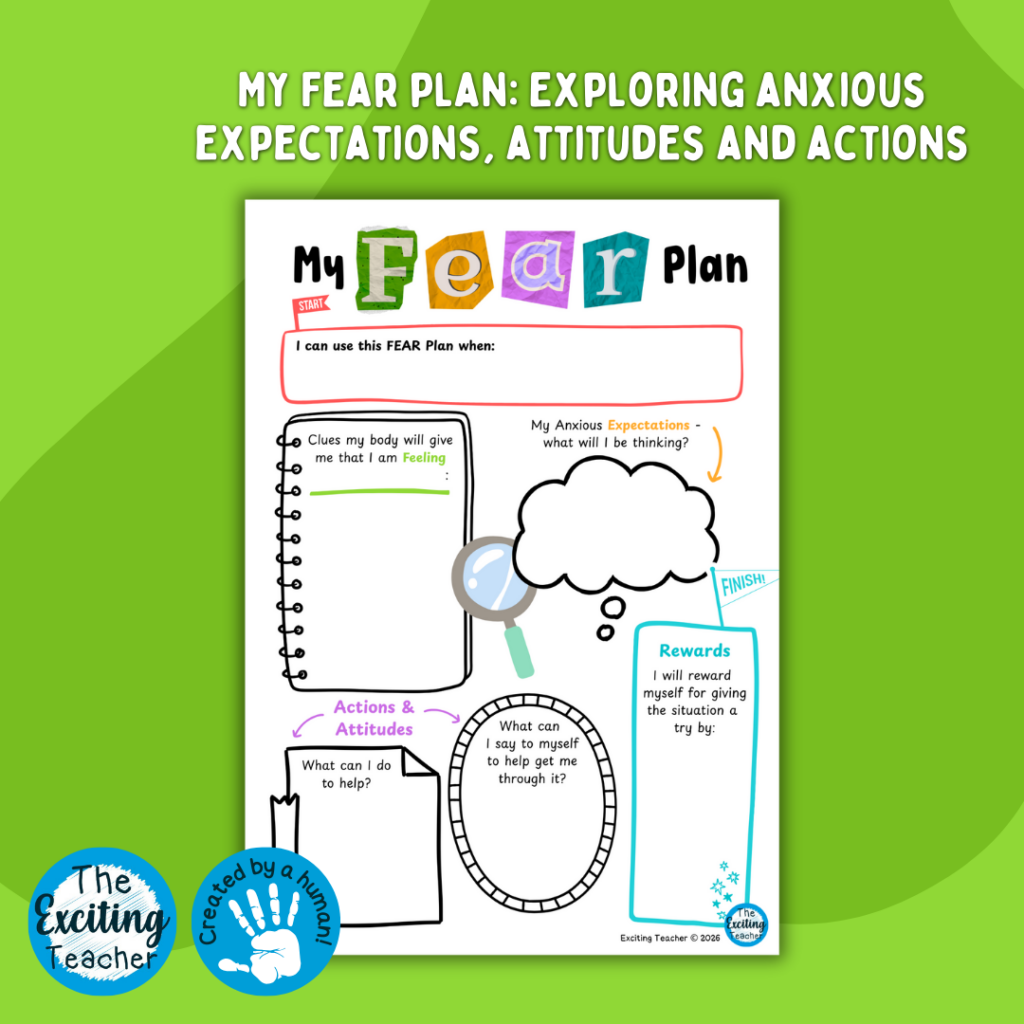
‘My FEAR Plan’ supports children to face their fears or worries, or to cope in tricky situations.
It explores what triggers negative emotions and what helps to turn those emotions into positives, how a child can navigate feeling frightened or unsure in a situation, how to be brave by using affirmations, setting rewards and using positive self-talk.
This FEAR Plan explores thoughts, bodily sensations, attitudes, and actions that help as well as rewards in line with a Cognitive Behavioural Therapy (CBT) approach to facing fears.
This resource features The Scribbles Crew, a group of friendly-looking emotions characters that can be created by any child. They are just that: scribbles!
How could this resource be used?
- To support children with identifying what is happening in their body when they are feeling frightened, worried or scared.
- To support children in facing their fears.
- To encourage children to create a holistic picture of everything going on in their lives.
Tag us on Instagram and use the hashtag: #ExcitingTeacher
Relevant Curriculum Links
England PSHE Statutory Curriculum Strands:
KS1:
- KS1: H13 – how feelings can affect people’s bodies and how they behave.
- KS1: H17 – about things that help people feel good (e.g. playing outside, doing things they enjoy, spending time with family, getting enough sleep).
- H18. different things they can do to manage big feelings, to help calm themselves down and/or change their mood when they don’t feel good
- KS1: H19 – to recognise when they need help with feelings; that it is important to ask for help with feelings; and how to ask for it.
KS2:
- KS2: H15 – that mental health, just like physical health, is part of daily life; the importance of taking care of mental health.
- KS2: H16 – about strategies and behaviours that support mental health — including how good quality sleep, physical exercise/time outdoors, being involved in community groups, doing things for others, clubs, and activities, hobbies and spending time with family and friends can support mental health and wellbeing.
- KS2: H18 – about everyday things that affect feelings and the importance of expressing feelings.
- KS2: H20. strategies to respond to feelings, including intense or conflicting feelings; how to manage and respond to feelings appropriately and proportionately in different situations.
- KS2: H21. to recognise warning signs about mental health and wellbeing and how to seek support for themselves and others.
- KS2: L25 – to recognise positive things about themselves and their achievements; set goals to help achieve personal outcomes.
Scottish Health and Wellbeing Curriculum Outcome(s):
- I am aware of and able to express my feelings and am developing the ability to talk about them. HWB 0-01a / HWB 1-01a / HWB 2-01a / HWB 3-01a / HWB 4-01a.
- I know that we all experience a variety of thoughts and emotions that affect how we feel and behave and I am learning ways of managing them. HWB 0-02a / HWB 1-02a / HWB 2-02a / HWB 3-02a / HWB 4-02a.
- I understand that there are people I can talk to and that there are a number of ways in which I can gain access to practical and emotional support to help me and others in a range of circumstances. HWB 0-03a / HWB 1-03a / HWB 2-03a / HWB 3-03a / HWB 4-03a.
- I understand that my feelings and reactions can change depending upon what is happening within and around me. This helps me to understand my own behaviour and the way others behave. HWB 0-04a / HWB 1-04a / HWB 2-04a / HWB 3-04a / HWB 4-04a.
- I understand the importance of mental wellbeing and that this can be fostered and strengthened through personal coping skills and positive relationships. I know that it is not always possible to enjoy good mental health and that if this happens there is support available. HWB 0-06a / HWB 1-06a / HWB 2-06a / HWB 3-06a / HWB 4-06a.