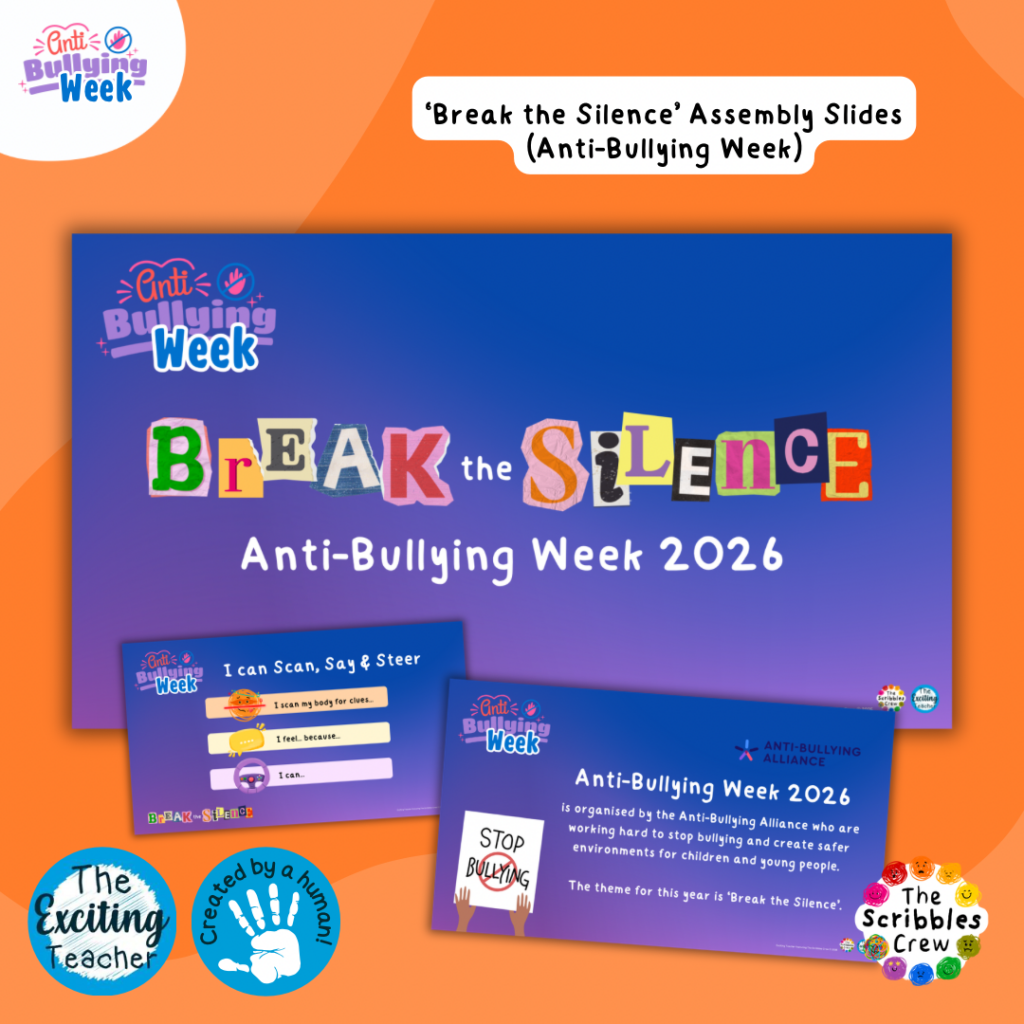
Anti-Bullying Week Resources: Assembly Slides & Pack (Break the Silence theme)
Becoming an Upstander Scenario cards for developing my skills as an Upstander to bullying.
Discover our Anti-Bullying Week 2026 resources collection, themed ‘Break the Silence’, designed to empower children across EYFS, KS1 and KS2 to recognise, prevent, and respond to bullying with confidence and kindness.
This comprehensive set of anti-bullying teaching resources includes engaging activities and worksheets to help teachers promote empathy, respect, and inclusion in the classroom.
Perfect for primary schools, each resource supports pupils in understanding how break the silence.
This collection of resources has been designed to support children to stand up and speak out for themselves and others to create a school culture that prevents bullying.
Ideal for use during Anti-Bullying Week 2026 or as part of your ongoing PSHE and emotional literacy curriculum.
Let’s explore Anti-Bullying Week together!
Relevant Curriculum Links
England PSHE Statutory Curriculum Strands:
- KS1: H11. about different feelings that humans can experience.
- KS1: H15. to recognise that not everyone feels the same at the same time, or feels the same about the same things.
- KS1: H17. about things that help people feel good (e.g. playing outside, doing things they enjoy, spending time with family, getting enough sleep).
- KS1: H18. different things they can do to manage big feelings, to help calm themselves down and/or change their mood when they don’t feel good.
- KS1: H19. to recognise when they need help with feelings; that it is important to ask for help with feelings; and how to ask for it.
- KS2: H15. that mental health, just like physical health, is part of daily life; the importance of taking care of mental health.
- KS2: H16. about strategies and behaviours that support mental health — including how good quality sleep, physical exercise/time outdoors, being involved in community groups, doing things for others, clubs, and activities, hobbies and spending time with family and friends can support mental health and wellbeing.
- KS2: H20. strategies to respond to feelings, including intense or conflicting feelings; how to manage and respond to feelings appropriately and proportionately in different situations.
- KS2: H21. to recognise warning signs about mental health and wellbeing and how to seek support for themselves and other.
- KS2: H22. to recognise that anyone can experience mental ill health; that most difficulties can be resolved with help and support; and that it is important to discuss feelings with a trusted adult.
Scottish Health and Wellbeing Curriculum Outcome(s):
- I am aware of and able to express my feelings and am developing the ability to talk about them. HWB 0-01a / HWB 1-01a / HWB 2-01a / HWB 3-01a / HWB 4-01a.
- I know that we all experience a variety of thoughts and emotions that affect how we feel and behave and I am learning ways of managing them. HWB 0-02a / HWB 1-02a / HWB 2-02a / HWB 3-02a / HWB 4-02a.
- I understand that there are people I can talk to and that there are a number of ways in which I can gain access to practical and emotional support to help me and others in a range of circumstances. HWB 0-03a / HWB 1-03a / HWB 2-03a / HWB 3-03a / HWB 4-03a.
- I understand the importance of mental wellbeing and that this can be fostered and strengthened through personal coping skills and positive relationships. I know that it is not always possible to enjoy good mental health and that if this happens there is support available. HWB 0-06a / HWB 1-06a / HWB 2-06a / HWB 3-06a / HWB 4-06a.